Tuesday, 24 November 2015

Know more about the Blister Packing and Softgel encapsulation Machines

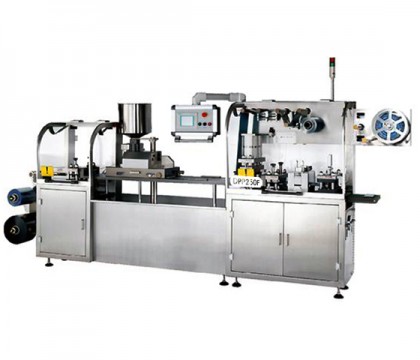
In this age of technological advancements, one can only expect world class packaging in the pharmaceutical sector. Without a good packaging, the medicine will lose its medicinal power. While some of the medicines are available in tablet and capsule format, there are also some, which are available in softgel form. Well, there are lots of complicated machines to take care of all these requirements. There is a machine called blister packing machine, with which the food, medicines, drugs and cosmetics are packed with the blister packing technology. There are different kinds of machines available for blister packing and softgel encapsulation, which makes life easier for the pharmaceutical companies.

Different kinds of blister packing machine:

One can choose from the Rotary thermoforming machine, flat forming and rotary sealing machines, or the flat forming and flat sealing machines. All these machines are particularly useful for all capsules, ampoules, injectable, vials, and other pharmaceutical formulations. These ensure that the quality of the medicines do not get affected in any way. Most of the machines make use of Computer aided designs, so that the efficiency is optimized and cost, quality and reliability is not compromised. Well, you can choose the right kind of blister packing machine, based upon your needs.

What is the use of Softgel encapsulation machine?

Softgel stands for soft Gelatine. The fully automatic encapsulation machine for softgel is used for making soft gelatin capsules. All the parts of the machines are made with chrome plating and stainless steel, so that the GMP requirements are met. Also, the process of making and filling the gelatin ribbon is done on the same machine.

The working of encapsulation machine

The process of gelatin encapsulation starts from the melting of gelatin, and then mixing the colour and the formula to it. With the help of the encapsulation machine, the solidification of melted gelatin is done. The medical solutions are then filled up and sealed. After that, the gelatin capsules are cut, and are formed into softer gelatine capsules. The capsules are then sent to the tumbler dryer with the help of a conveyor, where they are given a shape. Once the shape is given, the gelatin capsules are taken to the drying room, where they are completely dried. Once the drying process is over, the capsules are inspected, and the oily stains are taken off with the help of cleaning machine. Then, they go through a packing process.

These machines are really useful for filling the substances, which cannot be melted in water. So, wherever encapsulation has to be done for such substances, the companies prefer going for the softgel encapsulation machine. These are suitable for products, such as drugs, cosmetics, vitamins, herbs, adhesives and lubricants.

Follow On:-

facebook twitter Googleplus

Friday, 9 October 2015

The Extensive Use of Blister Packing

Even though blister packages are quite difficult to open, they are incredibly helpful in many ways. The pharmaceutical industry, for example, would be helpless without blister packing to hold and keep disinfected all kinds of pills or capsules. Well, you must be wondering what other advantages lie under the tough to open base of these clamshell packing?

Blister Packing Machines
Even at present, when environment friendly packing is at top of each brand’s list, plastic packing still rules the industry. It avails in all shapes & sizes and is employed in all kinds of industries, from healthcare, retail, and food to electronics. Blister packing machines are particularly admired for its capability to securely seal a product within a box, while at the same time also disclosing a large portion of it to the customers.

The technique employed in blister packaging is thermoforming, a manufacturing procedure where a plastic piece is heated to an adaptable forming temperature, formed to a precise shape in a pattern. The plastic piece is affixed to a sheet or cardboard demonstrating brand & product info. It mightn’t be the best-looking packaging method from a designer’s perspective.

Blister packaging is most frequently employed in the healthcare & pharmaceutical industries, sealing & keeping sterile capsules and other drugstore associated stuffs. Yet other items benefit from blister packing also. What about that doll your little kid is always asking for whenever you come to a toy shop, allowing him to grasp the object from the shelf without injuring it? Other stuffs comprise cosmetic & battery products that particularly require to remain clean throughout transportation to and from vendors.

For all their expediency blister packages are considerably inexpensive to make, a little less anyway than other synthetic packing methods. During production several packs can be made at the same time that can hold diverse stuffs without having to change too many variables. Visualize having to commence a whole new packing procedure for capsule that slightly varies in shape and size. It’d make the manufacturing procedure rather simple.

Capsule Filling Machines

Blister packing machines, capsule filling machines are now increasing in demand due to the increasing use of blister packing in most of the products. Especially, Pharmaceutical industry is heavily reliant on high-quality blister packing machines in order to come with the best quality products for their users.

There are many retailers claiming to offer high quality blister packing machines. However, you should do your research before choosing anyone.

Follow On:-

facebook twitter Googleplus

Wednesday, 30 September 2015

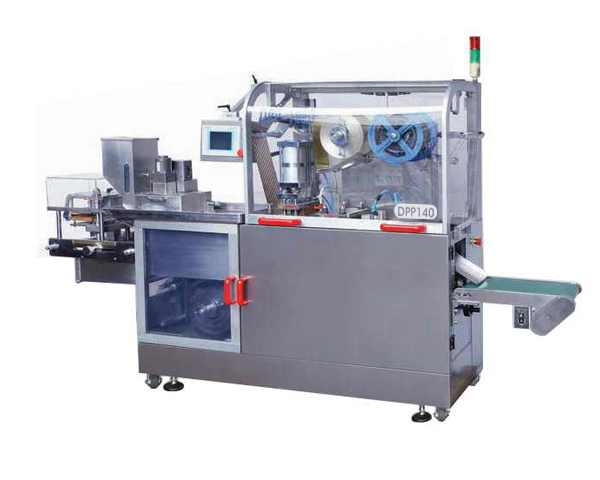
DPP-140D Blister Packing Machine

DPP-140-Blister-Packing  
DPP-140D Blister Packing Machine
  • It is specially designed for small size productions that require a high flexibility.
  • Its modular and compact concept optimizes the production in a small working area.
  • Main advantages of this machine are the simple operation and the high efficiency.
  • It allows forming thermoplastic and cold forming materials (Alu-Alu).
  • Automation by PLC and operation through touch screen control panel.
  • It has mechanical drives, which lend it high robustness and low maintenance.


DPP-140D is flexible and allows the adding of a great variety of accessories and optional extras:
  • Cold forming
  • Pre-cutting
  • Extended feeding area
  • Inspection and rejecting control systems.
  • Print mark registration
  • Automatic feeder
Specification:-
 
Blister Packing Machine DPP-140D
Output Max.100blisters/min
Speed Alu/PVC,15- 50 cycles/minAlu/Alu,15-30cycles/min
Die-cutting range max. 140*120mm
Forming depth max. 12mm(Optional:up to 20)
Indexing max. 130mm
Forming foil Thermoplastic, PVC, PVC-PVdC, PVC-Aclar, PET, etc.Cold forming (Alu-Alu).
Max.wide 150mm
Max.diameter 300mm
Max.thickness 300 microns
Lidding foil Al, paper, etc.
Max.wide 150mm.
Max.diameter 250mm.
Power supply 380V/220V 50/60Hz
Power consumption 3.2Kw
Water consumption 50 Its/hour @ 15/18℃
Air consumption 150 Its/min. @ 6Kg
Dimensions L=2300mm A=560mm H=1410mm
Net weight 650Kg

Follow On:-

facebook twitter Googleplus